
Heating

Why does a pellet stove smoke (or fail to ignite)? 5 common causes and quick solutions

Stufa a pellet fa fumo o non si accende | Grim Network

If your pellet stove produces smoke, smells bad, or doesn’t start properly, the most likely causes are five: 1) a blocked flue (due to soot buildup or bird nests), 2) poor-quality or damp pellets, 3) a dirty or clogged burn pot that prevents proper combustion, 4) worn door gaskets that alter air draft, or 5) a faulty ignition glow plug (the main cause if the stove does not start at all).

Solving these issues almost always requires targeted maintenance. Ignoring smoke is not only inefficient but can also be dangerous. Let’s analyze each cause and its corresponding solution.

cadel-brandPellet stoves
Select options This product has multiple variants. The options may be chosen on the product page

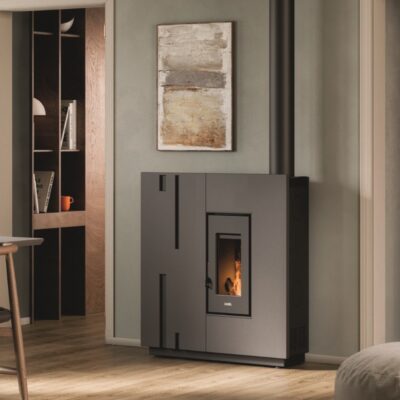
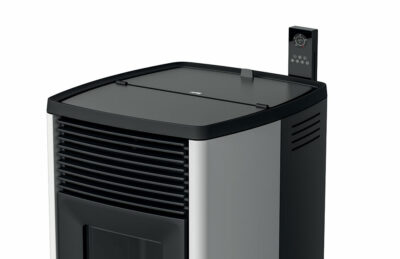
Pellet stove Cadel series Baggy 7kW

Price range: €1.820,00 through €2.090,00 IVA inclusa

mcz-brandPellet stovesCoreMaestro M3
Stufa a pellet MCZ Ego UP-XUP | Grim Network
Select options This product has multiple variants. The options may be chosen on the product page

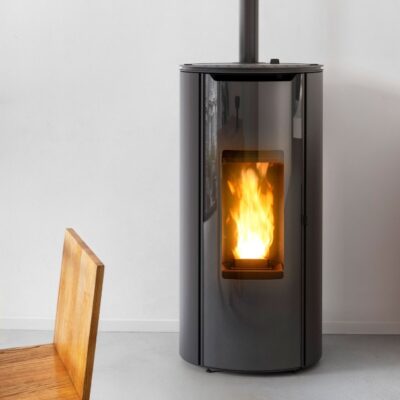
Pellet stove MCZ series Ego Air Matic 8kW UP-XUP with Core technology

2.580,00 IVA inclusa
mcz-brandPellet stovesMaestro M1
Stufa a pellet MCZ Mini | Grim Network
Select options This product has multiple variants. The options may be chosen on the product page

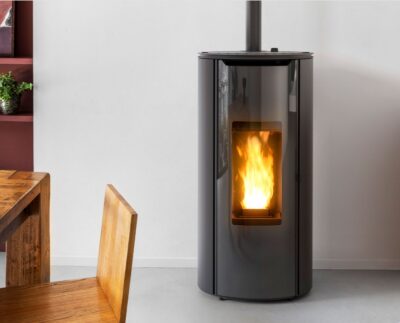
Pellet stove MCZ series Mini Comfort Air 8 UP-XUP! M1

3.420,00 IVA inclusa

The 5 main causes explained (and how to fix them)

Correct diagnosis is essential. Smoke is always a symptom of incomplete combustion. Let’s see why this happens.

1. Blocked or dirty flue (the number one enemy)

This is the most common and dangerous cause of smoke re-entering the room.

  • The problem: accumulated soot narrows the passage, or worse, bird nests may completely block the exhaust. If fumes cannot exit, they flow back into the stove.
  • The solution: professional flue cleaning by a certified chimney technician is mandatory, at least once a year before the heating season, as required by regulations.

2. Dirty or clogged burn pot

If the stove “chokes” during ignition or produces thick smoke, the issue is often at the heart of combustion: the burn pot.

  • The problem: as pellets burn, they leave residues (clinker). If the burn pot is not cleaned daily, its holes become clogged. Combustion air cannot flow properly, the flame is weak, and pellets accumulate, producing smoke instead of a lively flame.
  • The solution: perform daily cleaning of the burn pot using an ash vacuum. Make sure all holes are clear before every ignition.

3. Poor-quality or damp pellets

The stove is designed to burn optimal fuel. Unsuitable pellets only cause problems.

  • The problem: pellets with high moisture content (above 8–10%) or rich in resins and binders swell during combustion, burn poorly, and produce excessive smoke and ash, quickly blackening the glass.
  • The solution: use only ENplus A1 certified pellets. Store the bags in a dry place, away from damp walls or floors.

4. Electrical issues: the glow plug doesn’t heat up

If the stove loads pellets, attempts to start but does not produce a flame (and after a while goes into “failed ignition” alarm), the issue is almost certainly electrical.

  • The problem: the glow plug is the electrical heating element that becomes incandescent to ignite the first flame. Over time, it wears out and fails. If it’s broken, pellets will accumulate in the burn pot but never ignite.
  • The solution: this is a technical intervention. The glow plug must be replaced by an authorized service center.

5. Worn gaskets and draft problems

If the stove smokes and the glass turns black very quickly, there may be an air intake issue.

  • The problem: the gaskets (the braided rope seals) around the firebox door and ash drawer must ensure airtight sealing. If they are worn, the stove draws “false” air from the wrong points. This disrupts the balance between air and fuel, worsening combustion and causing smoke.
  • The solution: check the condition of the gaskets. If they appear dry, frayed, or flattened, they must be replaced.

Maintenance: prevention is the best solution

To avoid smoke and ignition failures, prevention is key. A proper maintenance plan ensures efficiency and safety:

  • Daily cleaning: empty and clean the burn pot.
  • Weekly cleaning: vacuum the ash drawer and combustion chamber.
  • Annual service (technician): full stove cleaning, component checks (gear motor, gaskets, glow plug), and certified flue cleaning.

FAQ – Frequently asked questions about smoke and pellet stove issues

Yes, a slight and brief emission of smoke or pellet odor in the first few minutes of ignition is normal. The stove is reaching its operating temperature. If smoke persists after 5–10 minutes or fills the room, there is a problem (usually related to draft or a dirty burn pot).

Blackened glass is a clear sign of “dirty” combustion. The main causes are low-quality pellets (damp or resinous), a clogged burn pot, or worn gaskets that prevent the glass self-cleaning airflow from working properly.

Regulations (UNI 10683) require flue cleaning at least once a year, carried out by a qualified technician who must issue a certificate. This should be done before the heating season to remove soot and possible obstructions (e.g., nests).

This alarm activates when the stove’s sensors (specifically the flue temperature probe) do not detect the achievement of a stable flame temperature within the maximum allowed time (usually 15–20 minutes). The causes are almost always: a faulty glow plug, a dirty burn pot that chokes the flame at startup, or pellets not feeding properly into the burn pot.

Absolutely yes. If pellets are not fed into the burn pot, the stove has no fuel to ignite. This is almost always a mechanical or electrical issue: an empty hopper, a blocked or faulty auger motor, or very poor-quality or overly long pellets jamming the auger. In the latter cases, professional technical intervention is required.